
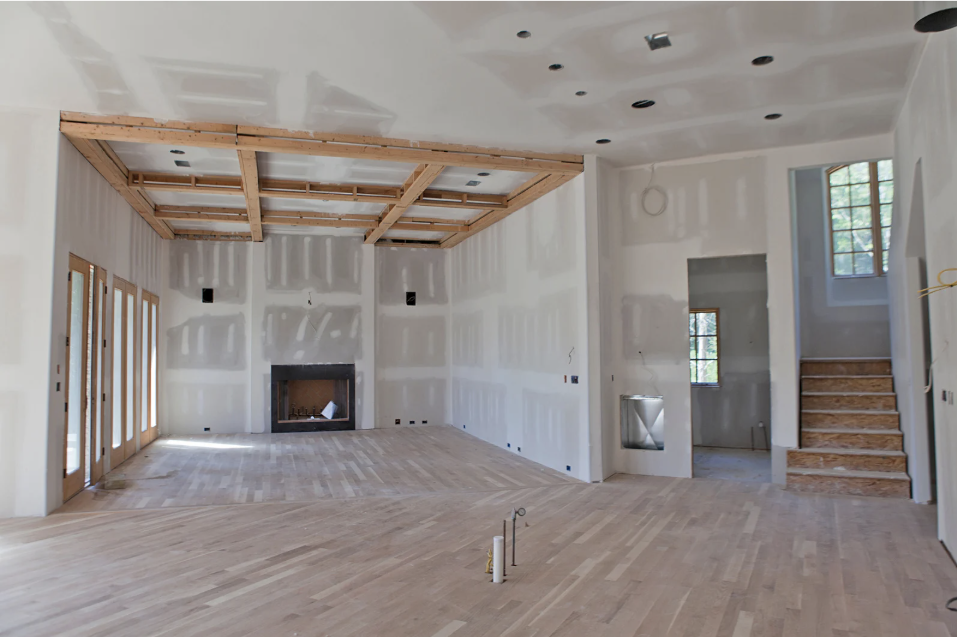
You’ve finally reached the end of your Miami home renovation. The contractor has packed up their tools, the new marble countertops are installed, and the space looks—at first glance—ready for a magazine shoot.
But then you swipe a finger across a "clean" shelf and realize it’s covered in a fine, gray powder. You grab a broom, give it a sweep, and suddenly the air feels heavy, your throat gets scratchy, and twenty minutes later, the dust has simply resettled exactly where it was before.
At Essential Cleaners, we see this every week. Post-construction dust isn't just "dirt"—it’s a complex, invasive byproduct that requires more than a broom and a prayer. Here is why "just sweeping" is a losing battle.
1. The "Invisible" Danger: Micron-Sized Particles
Construction dust isn't like the dust bunnies under your bed. It’s composed of microscopic particles of silica, drywall gypsum, wood fibers, and concrete.
These particles are measured in microns. To give you an idea of the scale:
Human Hair: 70 microns wide.
Construction Dust: Often as small as 0.3 to 5 microns.
When you use a standard broom, you aren't removing these particles; you are launching them into the air. Because they are so light, they can stay suspended for hours, eventually finding their way into your lungs and your HVAC system.
2. The Static Charge Problem
Drywall dust is notorious for having a slight static charge. This causes it to "cling" to vertical surfaces like walls, window tracks, and even light bulbs. A simple wipe-down with a dry cloth often just shifts the static around, causing the dust to leap from the cloth back onto the surface.
Professional post-construction cleaning requires neutralizing agents and specialized microfiber technology that traps the charge rather than spreading it.
3. The HVAC "Lungs" of Your Home
The biggest mistake homeowners make is ignoring the vents. During a renovation, the fine dust gets sucked into your return air vents. If you don't perform a pressurized vacuuming of those entry points, the moment you turn on your AC to combat the Miami heat, you are effectively "snowing" construction dust back into every room you just cleaned.
4. Hard Surfaces vs. Micro-Scratches
If you try to "scrub" construction dust off new glass or stainless steel with a regular sponge, you might be doing permanent damage. Concrete and grout dust are highly abrasive. Dragging those particles across a brand-new surface is like using sandpaper.
Essential Cleaners uses a "Top-Down" wet-mist method:
Air Scrubbing: We settle the airborne particles first.
HEPA Filtration: Using industrial vacuums that trap 99.97% of particles (so they don't blow out the exhaust).
The Damp-Wipe Sequence: A multi-stage process of using specific solutions to lift—not drag—the debris off your high-end finishes.
The Essential Verdict
Post-construction cleaning is the "bridge" between a construction site and a home. Sweeping might make it look better for ten minutes, but a professional deep clean makes it breathable.
Don't let your beautiful new renovation become a respiratory hazard. Let the experts handle the microscopic heavy lifting.
Book Your Post-Construction Deep Clean Today